Aircraft Jet Wash - The US Air Force has unveiled a new robotic arm designed to reduce the time and manpower required to clean a fighter jet.
This arm can completely wash an F-16 Viper in one hour, saving a lot of time and manpower. The technology can be transferred to other aircraft and could help in decontaminating aircraft exposed to hazardous chemicals.
Aircraft Jet Wash
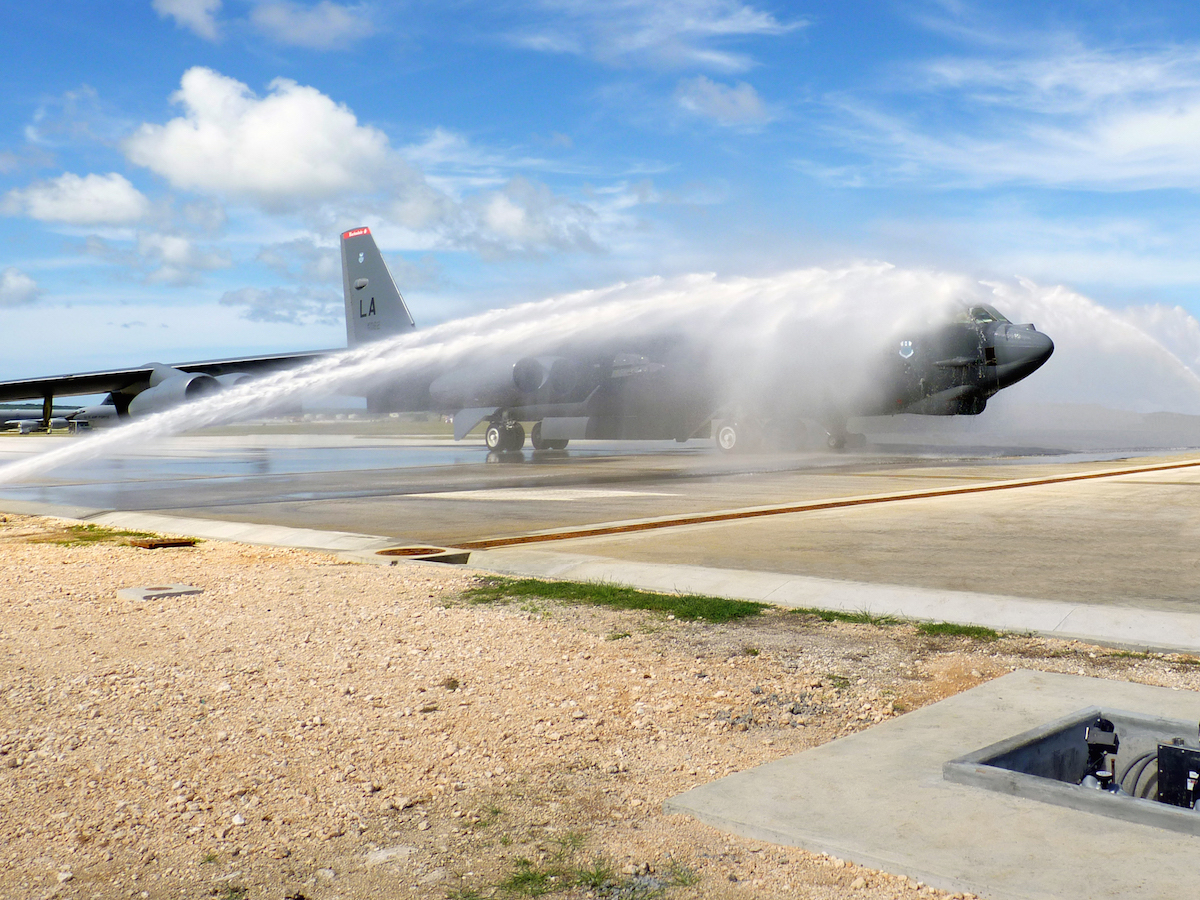
The Texas National Guard's 149th Fighter Wing recently showed their hand at Joint Base San Antonio-Lackland. Air Force photos show a large robot hand washing Lone Star Gunfighters' F-16s and drop tanks.
Mayday, Mayday, Mav's In Trouble, He's In A Flat Spin!\
It usually takes a crew of four airmen up to six hours to wash a fighter jet, but a robot can do it in under an hour, the 149th Wing says. This saves up to 24 hours of labor and reduces the depth of the freshly cleaned pile from 2 days to 1.
AFWERX, an Air Force program that promotes innovation across the branch, has created a robot that the wing boasts of its robotic jet washer. AFWERX inspires members of the Airmen and Space Force to develop new ways of doing things, and also invests in commercial companies that can fit the needs of the military.
The Jet Washing Robot can play an even more important role in wartime. The robot, or one of its descendants, managed to save up to four planes from chemical exposure.
The F-16 usually serves as a close air support platform, flying low-altitude missions in support of friendly forces, and it is unlikely that a fighter can be "sandblasted" by enemy chemicals. The jets may need to be cleaned if the airbase itself is attacked with chemical weapons - especially continuous ones designed to destroy the base until everything is contaminated.
Easyjet Alicante Airport Editorial Image. Image Of Refueld
Missiles, treasure hunts and more Prince Harry once sent a fighter jet after his father, Canada chose the F-35 as their next fighter jet. What is it like to sit in an airport?
Why the U.S. It has launched its B-2 Stealth Bomber Fleet from the famous United States Space Force Mechanics. What equipment does the space force use? From Popular Mechanics United States Space Force Space Force Motives and Mission Army Selects V-280 for Next-Generation Assault Transport.
Why the F-105 Thunder is such a terrible plane Air Force Illuminates the New Bomber B-21 Raider Researchers Find 5 US Bombers in the Adriatic Sea From the Famous United States Space Force Mechanics Other Faces of the Space Force The sound or style of this article may not be. show cicpedic tone, used in Wikipedia. See Wikipedia's guide to writing better articles for ideas. (July 2021) (Learn how and who can remove this template message)
Wake turbulence is the disturbance of the air that forms behind the plane as it flies through the air. It has various properties, the most important of which are eddies and water currents. Jetwash refers to the fast moving gas exiting the jet gin; It is not stable, but temporary. However, the wings are very stable and can remain in the air for up to three minutes after the plane has passed. Therefore, it is not true turbulence in an aerodynamic SS, as true turbulence would be negative. Instead, it refers to the turbulence of the atmosphere experienced by an airplane flying in this area of turbulent air.
Wash And Go: Ge's New Way Of Cleaning Jet Engines Can Help Airlines Cut Emissions And Improve Operations
Wingtip vortices occur when the wing is lifted off the road. Air from under the wing is drawn around the tip of the wing in the area above the wing by the downward pressure on the top of the wing, causing air to rise from each wing. The strength of the wings is mainly determined by the weight of the aircraft and the speed of the wind.
Wake turbulence is particularly dangerous in the area behind the aircraft during takeoff or landing. During takeoff and landing, the aircraft operates at a high angle of attack. These flight patterns increase the formation of strong vortices. There may be several aircraft near the airport, all flying at low speeds and low altitudes; this presents an increased risk of awakening confusion with a reduced scope from which you can recover from any upset.
During ascent, the valves descend at a rate of 90-150 meters per minute and stabilize approximately 150-270 meters below the plane's flight level. For this reason, airplanes fly higher than 600 meters above low-risk areas.
Helicopters also cause wake turbulence. The lift of a helicopter can be much stronger than that of an airplane of the same weight. Strong wakes can occur when the helicopter is operating at low speeds (20-50 knots). Some medium and high speed helicopters create as strong a wake as heavy helicopters. This is because two-bladed main rotor systems, similar to light helicopters, create a stronger wake than rotor systems with more blades. The Bell Boeing V-22 Osprey's strong rotor opening may have exceeded manual specifications, which led to the crash.
Kids Fun Plane & Jet Wash Free Apk For Android Download
During takeoff and landing, in calm air, the plane's waves sink to the ground and travel sideways from the runway. Winds of 3 to 5 knots (3–6 mph; 6–9 km/h) will remain on the side of the runway, allowing downwind to the other runway. Because of the wing's wheels on the outer edge of the aircraft, this can be dangerous.
The accuracy of this section may be affected by outdated information. Please help update this article to reflect the correct information when information becomes available. (January 2023)
The Super category (code J) is currently only used by the FAA based on the FAA Aircraft Weight Class Table, which only includes the Airbus A380-800. ICAO is considering expanding the Super category.

From 2020 April 24 ICAO documents also refer to the A380 as Wake Turbulce category "HEAVY" meaning here the order and confirmation of the absence of the A380 in the name of the type of aircraft.
Tourist Dies After Being Hit By Jet Blast At St. Maarten's Maho Beach
The ends of the Airbus landing at Oakland International Airport meet the ocean as it descends to the ground.
There are several methods of separating takeoff, landing and en-route flight phases based on wake turbulence components. Air traffic controllers decide the direction of the flight based on these parameters. Visually controlled aircraft are notified of recommended separation requirements and are expected to maintain their separation.
Most importantly, the Boeing 757, which falls into the Large Category in terms of its MTOW, is considered a difficult target to separate because of the many incidents where small aircraft lost control (often crashed) following closely behind the 757.
An aircraft in the lower take-off phase cannot be allowed to take off more than two minutes behind an aircraft in the higher take-off phase. If the next flight does not take off from the same location as the previous flight, this time is extended to three minutes. In general, the flight is usually safer if it takes off before the flight arrives. However, care must be taken to be upstream (or otherwise) of any eddies created by the previous aircraft.
Best Of The Web: Surviving A Rotor Wash Crash
Which kept the previous weight classes but also corrected the difference in the speed of the process and the wing configuration. As a result, six groups of aircraft were created, and the space between these groups quickly increased the number of airports.
In Memphis, the increase in volume has been significant, with the FAA estimating a 15 percent increase and a reduction of three minutes in the average taxi time for FedEx (Memphis' largest carrier, with approximately 500 operations per day in 2012).
The FAA has continued with the Recategorization of Wake Turbulce, or RECAT. The FAA's overall plan is to gradually add more complex features to reduce signal separation and increase range. RECAT Phase I (first shown in Memphis) introduces six sections of static wake turbulence that replace traditional weight sections. The FAA used maximum takeoff weight, landing weight, wingspan, and cruising speed in Phase I to better represent the lift force of an airplane in flight, as well as the instability of an airplane that taxis to an additional meter. This analysis allows for the development of more effective wave turbulence separation minima than those specified in the original operating rules described in FAA Order JO 7110.65. in 2016 in April RECAT Phase I was carried out at 10 TRACON and 17 airport locations.

RECAT Phase II is a continuation of the RECAT program, which focuses on a wide variety of aircraft (123 ICAO type names representing more than 99% of US air traffic at 32 US airports) on 61 aircraft with 85. % of operations from 5 US and 3 European airports were used in RECAT Phase I. The primary risk of separation of RECAT Phase II is not defined by the wake turbulence component, but by specific pairs of types of series aircraft.
F 35 Fresh Water Rinse System Installed At Eglin > Eglin Air Force Base > Article Display
Cessna jet aircraft, jet aircraft services, jet wash aircraft, aircraft mechanic jet, jet aircraft, aircraft wash, jet wash, jet aircraft maintenance, small personal jet aircraft, personal jet aircraft, jet aircraft financing, jet aircraft management